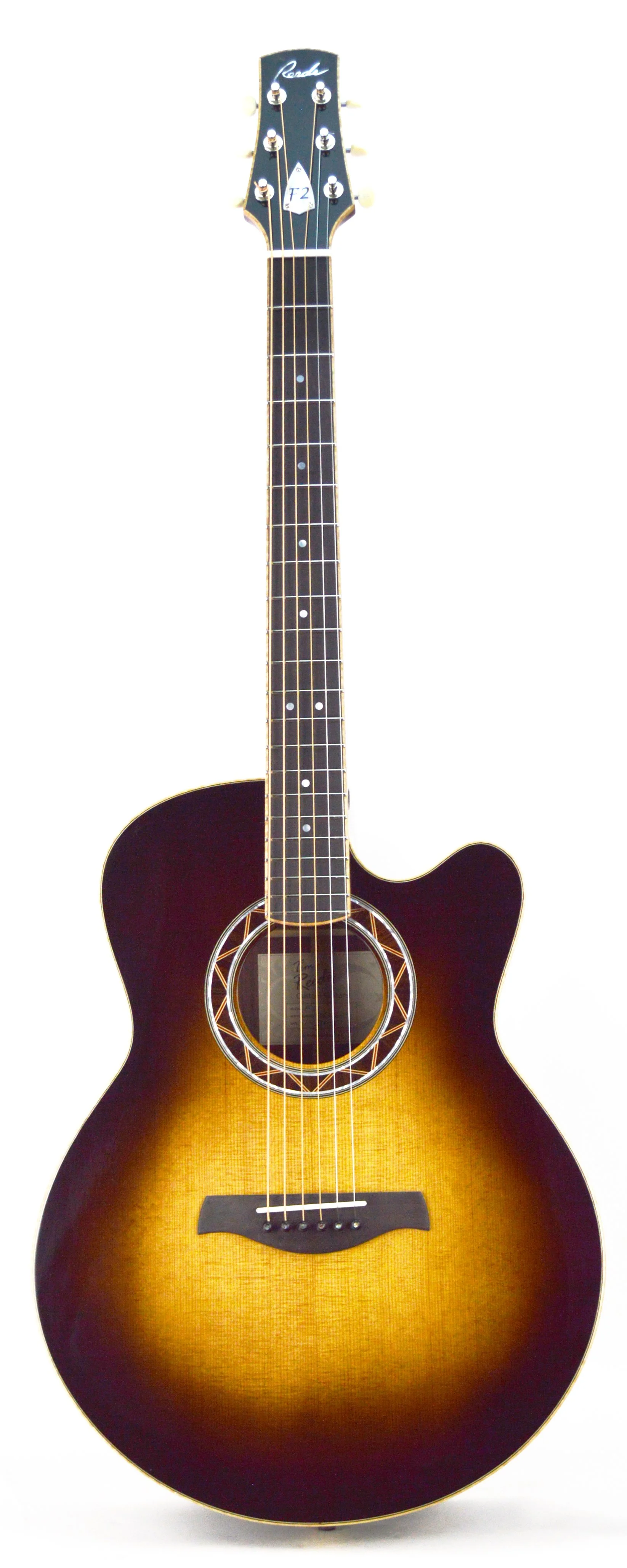
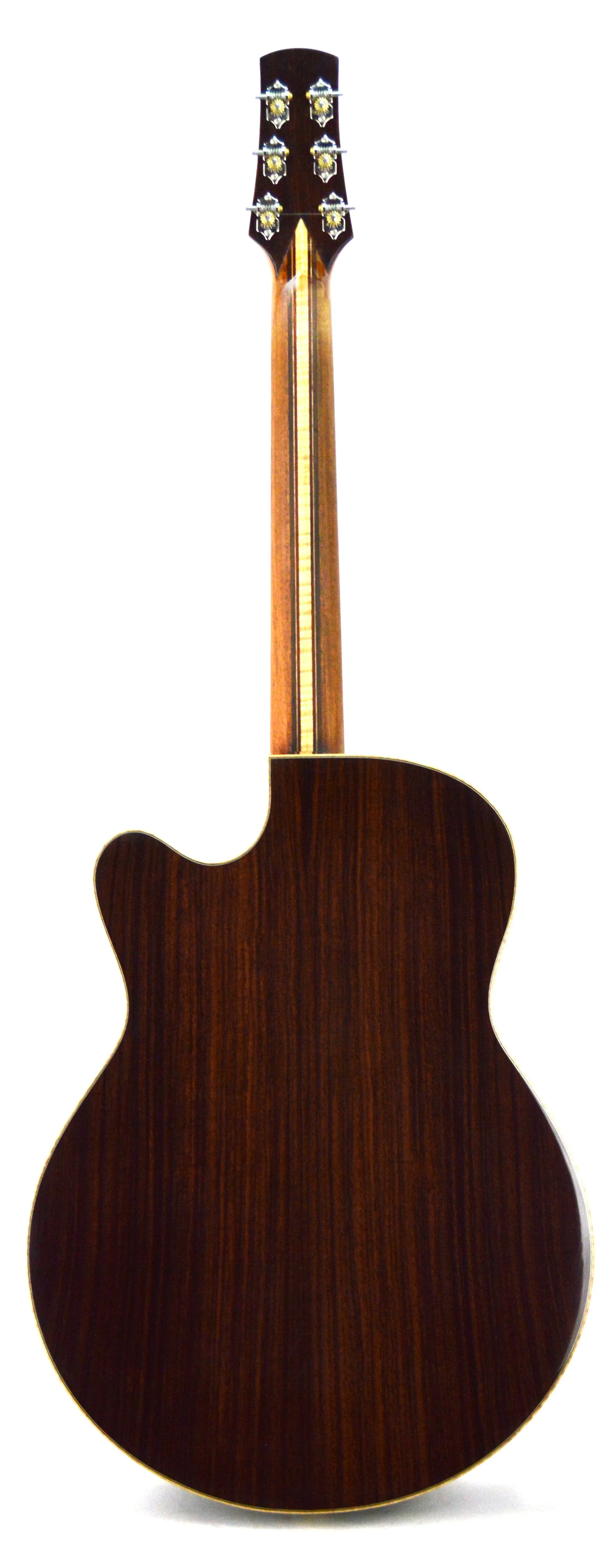
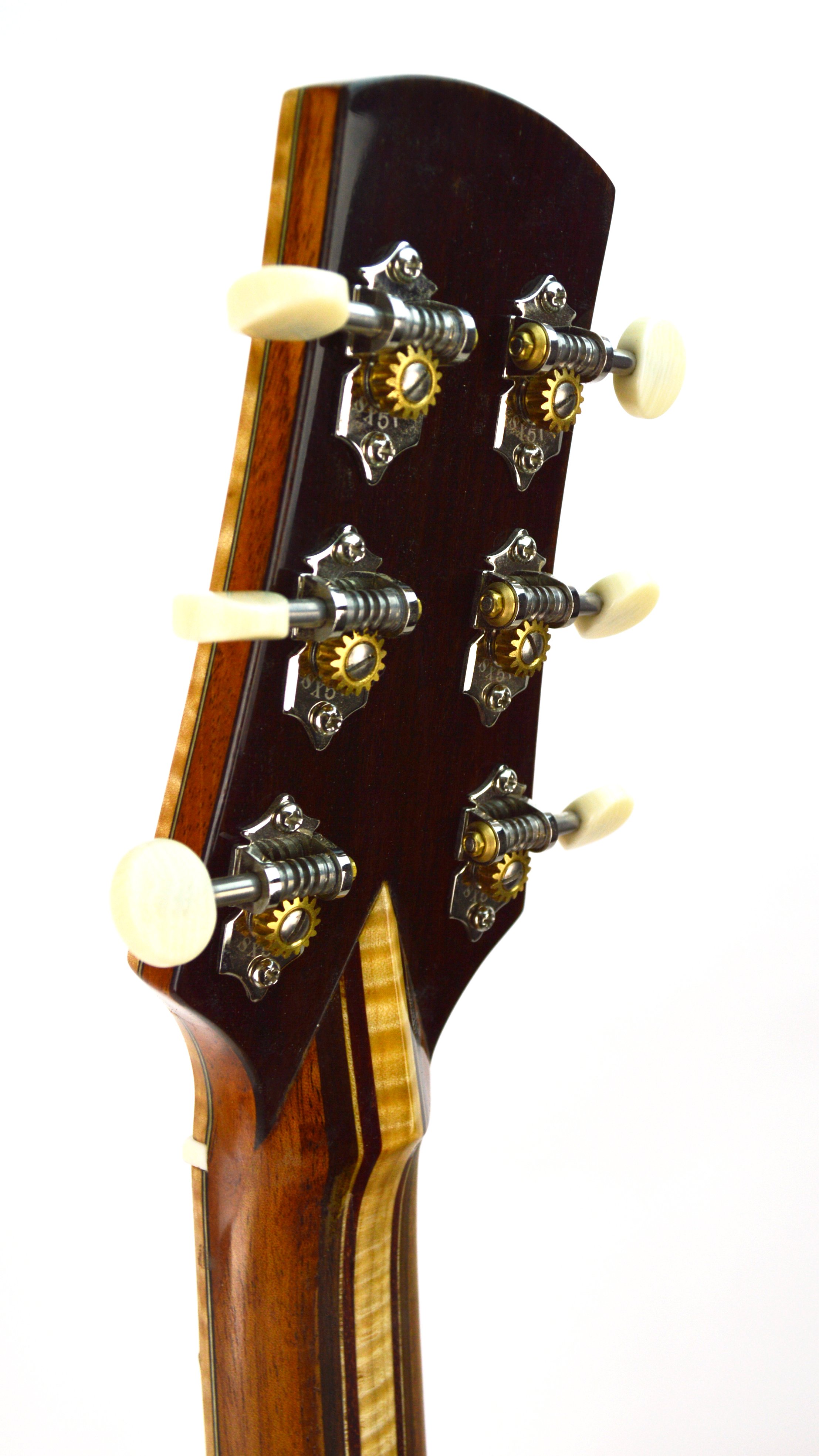
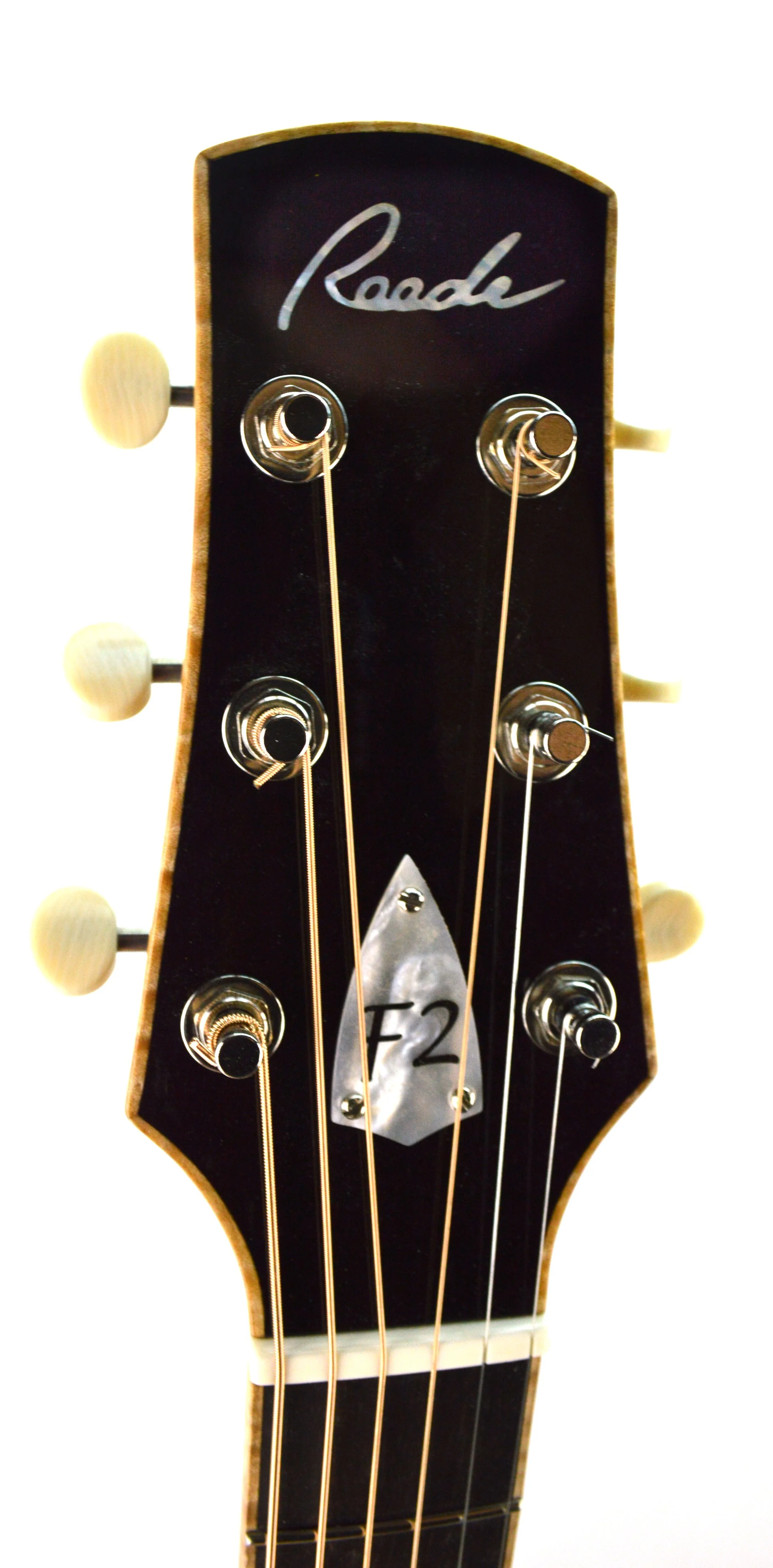
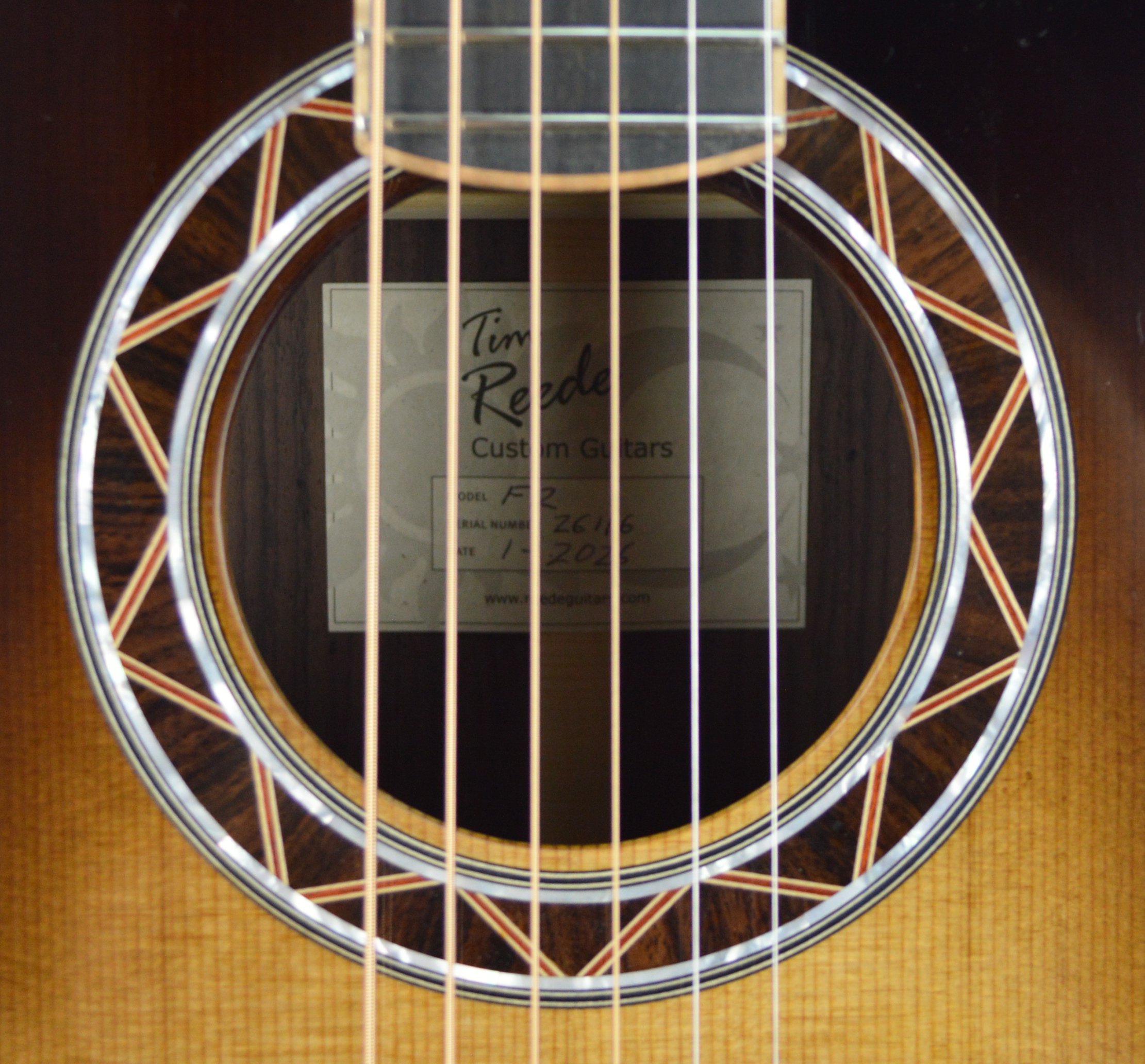
F2 (Falcon 2)
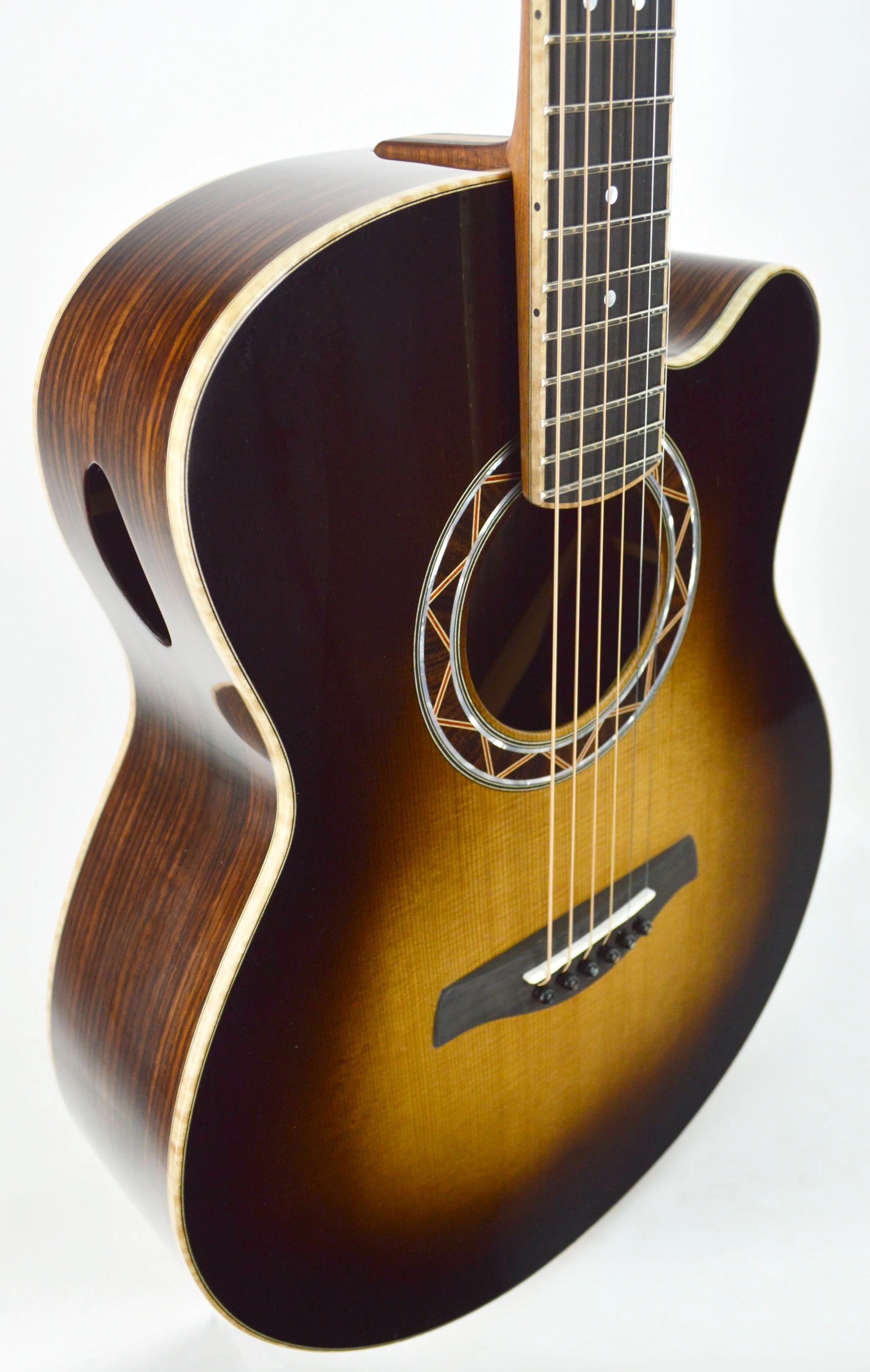
The body size is the same as the original Falcon. It can also be made with multi-scale and arm bevel.
The adjustable neck has been around for many decades. It solves several issues that acoustic guitars develop over time. Seasonal humidity changes cause the soundboard to rise and fall, changing the string height. And as years of tension pull on the wood, neck angle also changes, eventually needing an expensive neck re-set. The ability to quickly adjust the neck angle will correct these problems simply by turning a screw.
In the past, there was a problem of coupling between the neck and body that resulted in some loss of tone and volume. This new design solves that problem, as well as another common problem with flat-top acoustic guitars.
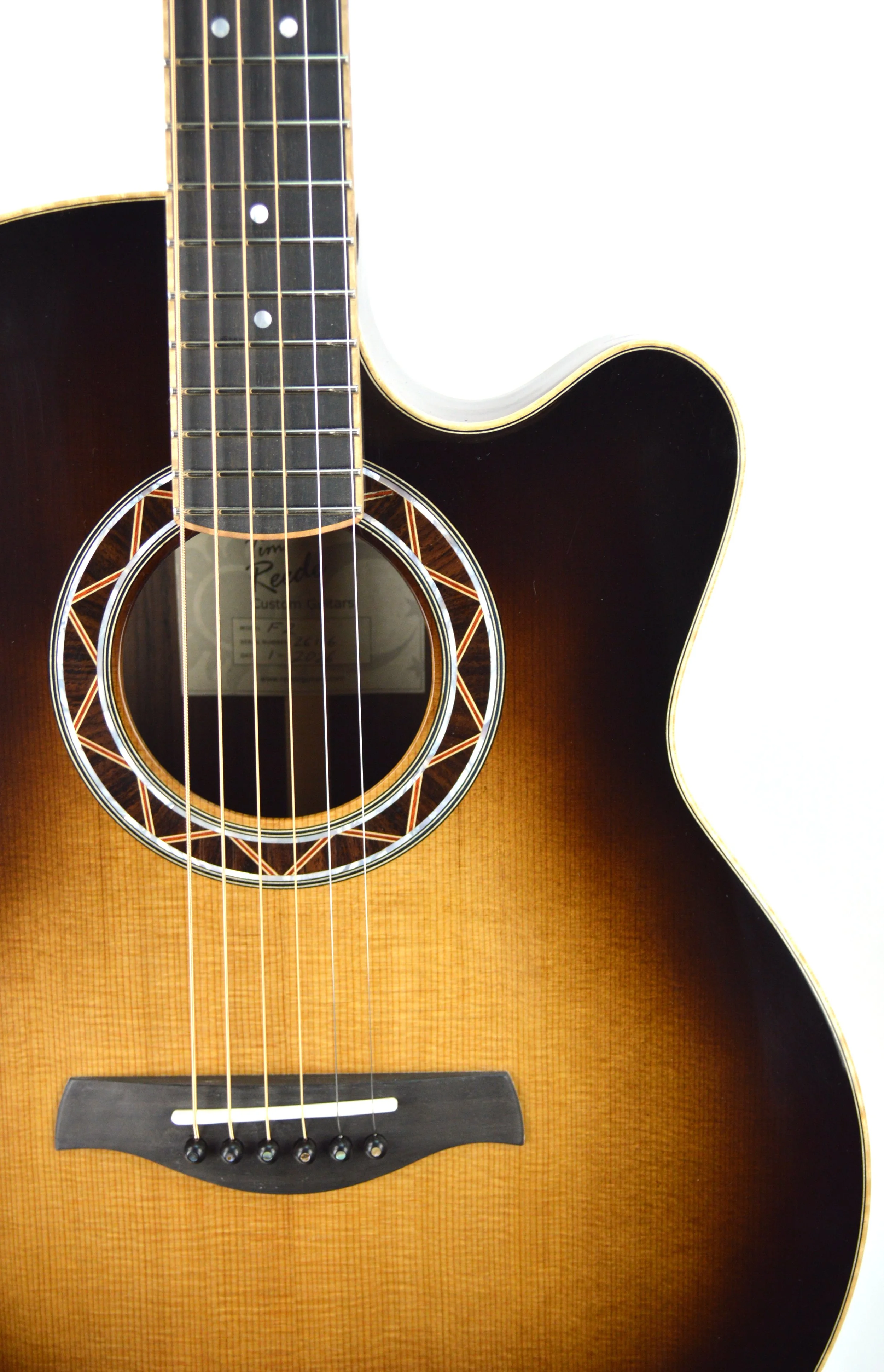
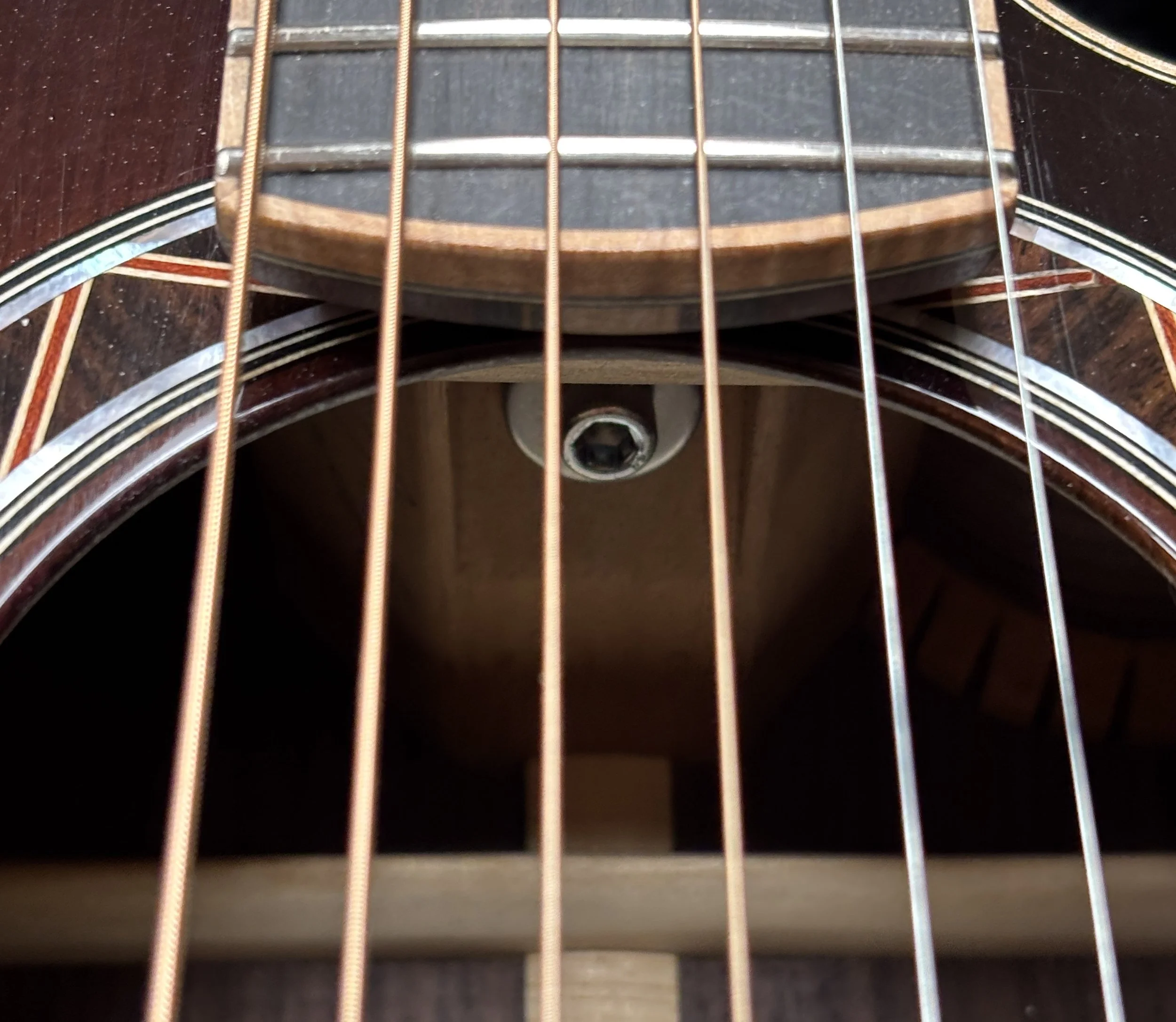
This neck design has a single pivot point bolt and an adjustment bolt that is accessed through the sound hole. Once the desired string height is achieved, the pivot bolt is tightened and the neck is clamped tightly in place. This insures excellent coupling for maximum tone and volume.